If you’re facing tax foreclosure in Georgia, act now: check the deadline on your county tax notice and call your county tax commissioner’s office for the exact payoff amount. Georgia tax foreclosure moves fast, and understanding your options today can mean the difference between saving your property and losing it at auction.
What Is a Tax Foreclosure (Tax Sale) in Georgia?
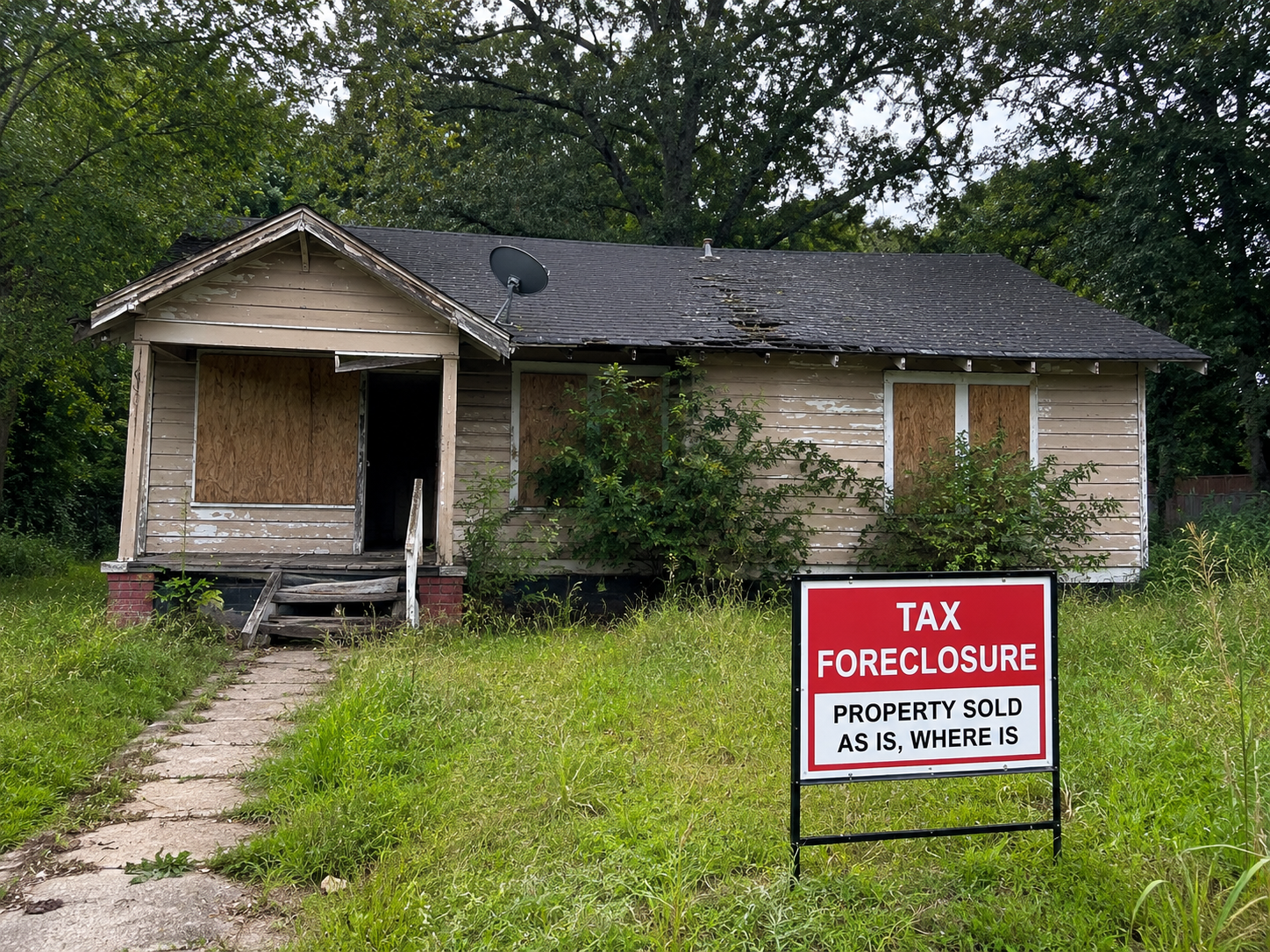
A tax foreclosure — often called a tax sale or tax deed sale in Georgia — is the process counties use to collect unpaid property taxes. Unlike a mortgage foreclosure, which a lender initiates for missed loan payments, a Georgia tax foreclosure is initiated by your county tax commissioner when property taxes, special assessments, penalties, and fees go unpaid.
Why this matters: unpaid property taxes become a lien on your property and can lead to a public sale of the property or the county taking title. That means you can lose your home or land if you don’t act quickly on a tax foreclosure notice.
Quick facts about Georgia tax foreclosure
- Who handles it: County tax commissioners/treasurers administer tax collection and the tax foreclosure sale process in Georgia counties (not the state directly).
- Different from mortgage foreclosure: A tax foreclosure clears the tax lien, not a mortgage lien — but either can cause loss of the property if unpaid.
- Notices matter: Counties publish or mail notices before a tax sale. Read any notice you receive and note deadlines immediately.
- Costs add up: Back taxes plus penalties, interest, and sale costs increase the amount you must pay to stop a tax foreclosure.
- Local variation: Procedures and timelines vary by county (Fulton County and DeKalb County each publish their own steps). If your property sits in Fulton County, see our guide on the Fulton County delinquent tax list to check your status.
Georgia-specific example (sample — verify with your county): if you receive a delinquent tax notice from your county tax commissioner’s office, it will list an amount due and a sale date or deadline. Contact the county right away to get an exact payoff amount and any options for payment schedules.
Where to get official information: check the Georgia Department of Revenue for general tax guidance, your county tax commissioner’s website for local procedures, and Legal Aid of Georgia for free legal help if you cannot afford an attorney.
Notices, Timeline, and the Risk of a Tax Foreclosure Sale
When property taxes go unpaid in Georgia, counties follow a sequence of notices and deadlines that can end in a tax foreclosure sale. Understanding that timeline is critical — missed deadlines can lead to loss of your home or land if you do not act.
Typical steps in a Georgia tax foreclosure
- Notice — The county issues a delinquent tax notice by mail and often publishes notice in a local newspaper or posts it on the county website. Read it immediately and note the deadline and sale date.
- Payment window — After notice, there’s a window to pay the full amount due (back tax + penalties + interest + sale costs) or arrange payment. Contact your county tax commissioner’s office for the exact payoff amount.
- Tax sale — If unresolved, the property can be offered at a public tax foreclosure sale. Counties may sell tax liens or tax deeds depending on local law — confirm with your county which applies.
- Redemption / deed transfer — Some Georgia jurisdictions allow a redemption period after a tax foreclosure sale; in others, the deed transfers to the purchaser soon after the sale. Availability and length vary by county — verify locally.
Time and amounts to watch
Exact timelines and amounts vary by county. The amount due typically includes the original tax, penalties, interest, and administrative fees, and these costs grow quickly the longer a tax foreclosure goes unresolved. Example (sample numbers — verify with your county): $5,000 in unpaid taxes could become $5,750 or more after penalties, interest, and sale costs. Always request a written payoff amount from your county tax office.
Immediate actions if you receive a tax foreclosure notice
- Read the notice carefully and mark the sale date and any payment deadline.
- Call your county tax commissioner right away and ask for the exact payoff amount and whether a payment plan is available.
- Gather proof of identity, your tax account number, and documents showing payments or exemptions you believe apply.
- If you cannot pay, contact Legal Aid of Georgia or a local attorney immediately — do not assume you have time before the tax foreclosure sale.
Sample phone script for your county tax office:
“Hello, my name is [Your Name]. I received a delinquent tax notice for property at [property address]. Can you tell me the total amount due today, the payment deadline, and whether a payment plan or postponement of the sale is available?”
Options and Programs to Avoid Tax Foreclosure in Georgia
If you’re a Georgia homeowner facing unpaid property taxes, there are several options that may help you avoid tax foreclosure. Availability and eligibility vary by county, so contact your county tax commissioner’s office and the agencies below right away.
Immediate actions (what to do first)
- Call your county tax commissioner’s office and request the exact payoff amount and sale date.
- Ask whether the county offers payment plans, postponements, or reinstatement options to stop the tax foreclosure.
- Collect documentation: tax account number, recent notices, proof of payments, ID, and hardship documentation if applicable.
Payment plans and installment agreements
Many Georgia counties will work with property owners to set up payment plans or accept partial payments to prevent tax foreclosure. These options vary widely — some counties accept installment payments before sale, others require full payment.
- Ask the county for written terms: amount required immediately, monthly payment schedule, and any fees.
- Get the payment plan in writing and confirm whether entering a plan removes the scheduled sale.
Hardship programs, exemptions, and relief
Georgia offers several property tax relief programs and exemptions that may reduce tax bills for qualified homeowners, including homestead exemptions and certain elderly or disabled exemptions. Some counties also offer temporary relief or postponements for people with documented financial hardship, unemployment, or serious illness.
- Check whether you qualify for a homestead exemption or other county-specific relief through your county tax assessor.
- If you’re experiencing financial hardship, provide documentation to the tax office and ask about available programs or waivers.
Veterans and special categories
If you’re a veteran, you may be eligible for exemptions or special assistance to help avoid tax foreclosure — contact the Georgia Department of Veterans Service and your county tax office to learn about veterans’ exemptions and documentation requirements.
Legal help and free assistance
If you can’t resolve the matter directly with the county, seek legal assistance quickly. Free or low-cost resources in Georgia include Legal Aid of Georgia, county bar referral services, and nonprofit organizations that help homeowners avoid losing their property to tax foreclosure.
- Contact Legal Aid of Georgia for possible free legal representation or referrals to pro bono attorneys.
- Call your local county bar association for attorney referral services.
- Local nonprofits and faith-based organizations sometimes provide short-term assistance for emergency tax payments — ask county social services for referrals.
Alternatives if you can’t stop the tax foreclosure
If you cannot pay the amount due, other options include:
- Working with a lender to refinance or obtain a home equity loan to cover the tax debt (this creates new debt and may not be available quickly enough).
- Exploring a short sale or deed-transfer alternatives with an attorney if you’re prepared to give up the property but want to avoid additional penalties.
- Considering bankruptcy only after consulting an attorney — it may delay a sale but has significant long-term consequences under Georgia law.
- If selling is the right move, Atlanta Landbuyers buys Georgia land and homes as-is and can often close before a scheduled tax foreclosure sale. If your land itself has back taxes owed, see our page on selling tax-delinquent property for how the process works.
How to ask for help — scripts and CTAs
Phone script to request a payment plan:
“Hello, my name is [Your Name]. I received a delinquent tax notice for [property address]. Can you tell me the total amount due, whether a payment plan is available, and what documentation I need to apply?”
Phone script to contact Legal Aid or an attorney:
“Hello, I am a homeowner in [County], Georgia, facing a delinquent property tax notice and possible tax foreclosure. I need assistance to learn my options and whether I can stop the sale. Can you help me or refer an attorney?”
Resources to verify and contact
- Georgia Department of Revenue — general tax information and links to county resources.
- Your County Tax Commissioner’s website — for local payment plan rules and sale notices (search “[Your County] Tax Commissioner, GA”).
- Legal Aid of Georgia — for low-cost or free legal assistance.
- Georgia Department of Veterans Service — for veteran-specific exemptions and assistance.
Note: Confirm all program details, eligibility rules, and contact information with the relevant county offices and organizations before relying on them. Procedures, paperwork, and timelines differ across Georgia counties.
Step-by-Step Actions, Calculations, and Resources for Georgia Homeowners
If you’ve received a delinquent property tax notice in Georgia, follow this prioritized action plan immediately to stop a tax foreclosure or minimize the risk of loss of your home. Exact timelines, amounts, and available relief vary by county — confirm details with your county tax commissioner’s office.
- Read your notice and note deadlines (10–30 minutes) — Carefully read the notice for the sale date, payment deadline, account number, and amount due. Mark these dates on your calendar and treat the sale date as urgent.
- Call the county tax commissioner and get the exact payoff amount (same day) — Ask for a written payoff statement showing the full amount required to stop the tax foreclosure (back tax + penalties + interest + administrative fees).
- Confirm the redemption period or deed transfer timing (1 day) — Different Georgia counties handle tax foreclosure sales and redemption differently. Ask whether a purchaser receives a deed immediately or if there’s a post-sale redemption period.
- Ask about payment plans or postponements (immediately — get terms in writing) — Many counties offer installment agreements or short postponements. Confirm that entering the plan removes the scheduled sale.
- Gather documents and proof (1–2 days) — Collect your tax account number, the notice, ID, proof of prior payments, and any exemption paperwork (homestead, veteran).
- Contact legal assistance (same day) — If you can’t resolve the debt with the county, contact Legal Aid of Georgia or a local attorney to learn your rights under Georgia law and whether bankruptcy or other action may halt the sale.
- Explore financing or sale options if you cannot pay (days to weeks) — Refinancing, a home equity loan, or selling the property can pay off tax debts, though these actions take time and may not move fast enough to stop an imminent tax foreclosure.
- Apply for exemptions or relief if eligible (timeline depends on program) — Apply for homestead, senior, disabled, or veteran exemptions with your county assessor, and ask about hardship relief or temporary postponement programs.
How to calculate the amount due (example — verify with county)
Request a written payoff. A typical payoff calculation is:
Back taxes + penalties + interest + sale costs/fees = total amount due to stop the tax foreclosure.
Example (sample numbers; verify locally): Back taxes $4,000 + penalties $200 + interest $150 + sale fees $100 = $4,450 total payoff.
Sample scripts you can use
Phone script to county tax office:
“Hello, my name is [Your Name]. I have account number [account number]. I received a delinquent tax notice for [property address] dated [date]. Please tell me the exact payoff amount today, the payment deadline, and whether a payment plan or postponement is available.”
Phone script to Legal Aid / attorney:
“Hello, I am a homeowner in [County], Georgia, facing a potential tax foreclosure for my property at [property address]. I need assistance to learn my options to avoid foreclosure and whether an attorney can represent me or advise me on payment plans, bankruptcy, or redemption rights.”
Key contacts and resources
- County Tax Commissioner’s Office — call or visit your county website for the official payoff statement and sale notices.
- Georgia Department of Revenue — state-level information and links to county offices.
- Legal Aid of Georgia — for free or low-cost legal assistance if you qualify.
- Georgia Department of Veterans Service — veteran-specific exemptions and assistance if you are a veteran.
Notes and cautions: Do not delay — tax foreclosure sales move on strict timelines. Always get payoff amounts and payment plan terms in writing, confirm who to speak with at the county, and consult an attorney for legal advice.
Frequently Asked Questions About Tax Foreclosure in Georgia
What is a tax foreclosure in Georgia?
A tax foreclosure in Georgia — also called a tax sale or tax deed sale — is when a county sells a property, or the tax lien on it, to collect unpaid property taxes, penalties, interest, and fees. It’s separate from a mortgage foreclosure and is handled by your county tax commissioner, not your lender.
How long does the tax foreclosure process take in Georgia?
Timelines vary by county, but Georgia counties typically send delinquent notices, allow a payment window, and then schedule a public tax sale if the debt remains unpaid. Some counties also have a redemption period after the sale. Contact your county tax commissioner for the exact schedule that applies to your property.
Can I stop a tax foreclosure once I receive a notice?
Often, yes. Paying the full amount due, setting up a payment plan with the county, applying for a hardship program or exemption, or selling the property before the sale date can all stop a scheduled tax foreclosure. Call your county tax office immediately to confirm which options are available before your deadline.
What happens if my property is sold at a Georgia tax foreclosure sale?
Depending on the county, either the tax lien or the tax deed is sold to a buyer at auction. Some Georgia counties offer a redemption period, during which the original owner can reclaim the property by paying the amount owed plus additional costs. In other counties, the deed transfers to the purchaser soon after the sale. Confirm which rule applies in your county.
Can I sell my property to avoid a tax foreclosure sale?
Yes. Selling before the sale date is often the fastest way to avoid losing all your equity in a tax foreclosure. Atlanta Landbuyers buys land and homes as-is for cash and can often close before a scheduled tax sale date.
Where can I get free help with a Georgia tax foreclosure?
Legal Aid of Georgia offers free or low-cost legal assistance to qualifying homeowners facing tax foreclosure. Your county tax commissioner’s office can also explain payment plans, exemptions, and deadlines at no cost.
Act Now to Protect Your Home from Tax Foreclosure
If you’re a Georgia homeowner facing unpaid property tax bills, don’t wait. Tax foreclosure sales move on strict timelines, and missing deadlines can lead to the loss of your home or land.
Key takeaways:
- Read any delinquent tax notice immediately and note the sale date and payment deadline.
- Contact your county tax commissioner right away for the exact payoff amount and options to pause or avoid the tax foreclosure sale.
- Explore assistance and relief (payment plans, exemptions, veteran benefits) and get any agreements in writing.
- Act now: call your county tax office, request a written payoff, and if needed, contact Legal Aid of Georgia or a local attorney.
- If you can’t pay: consider short-term financing or selling the property as a fast, straightforward way to avoid the tax foreclosure sale and protect your remaining equity.
Where to get immediate help
- Your County Tax Commissioner’s Office — official sale notices, payoff statements, and payment options.
- Georgia Department of Revenue — state-level tax information and links to county resources.
- Legal Aid of Georgia and local bar referral services — assistance for homeowners who need low-cost or pro bono help.
- Georgia Department of Veterans Service — veteran-specific exemptions and assistance if applicable.
Final reminder: verify all amounts, deadlines, and procedures with your county, because time and rules vary across the state. If you or someone you know is at immediate risk of a tax foreclosure sale, contact us today or request a cash offer — we can often close before your sale date.
Related Articles
- Do Senior Citizens Pay Property Taxes? A Complete Guide
- How to Sell Inherited Property Fast Without Losing Money
- How Long Does Probate With a Will Take in Georgia
- Is Your Property on the Fulton County Delinquent Tax List?
- What Causes Property Taxes To Go Up or Down in Georgia
Ready To Sell Your Land? Start Here…
We are direct land buyers. There are no commissions or fees and no obligation whatsoever. Start below by sharing where your property is and where we can send your offer…
"*" indicates required fields