

Sell My Land Fast in Atlanta — Even With Back Taxes or Liens
We buy vacant, inherited, and tax-delinquent land across metro Atlanta .
No commissions, no fees, most closings in 7 to 14 days.
Sell My Land Fast in Atlanta: How to Get a Cash Offer on Vacant, Inherited, or Tax-Delinquent Land
A practical guide for metro Atlanta landowners on what a fast land sale actually involves — what your parcel is worth, what it costs you to keep waiting, how back taxes and liens get handled at closing, and how a 7-to-14-day cash close works in Georgia.
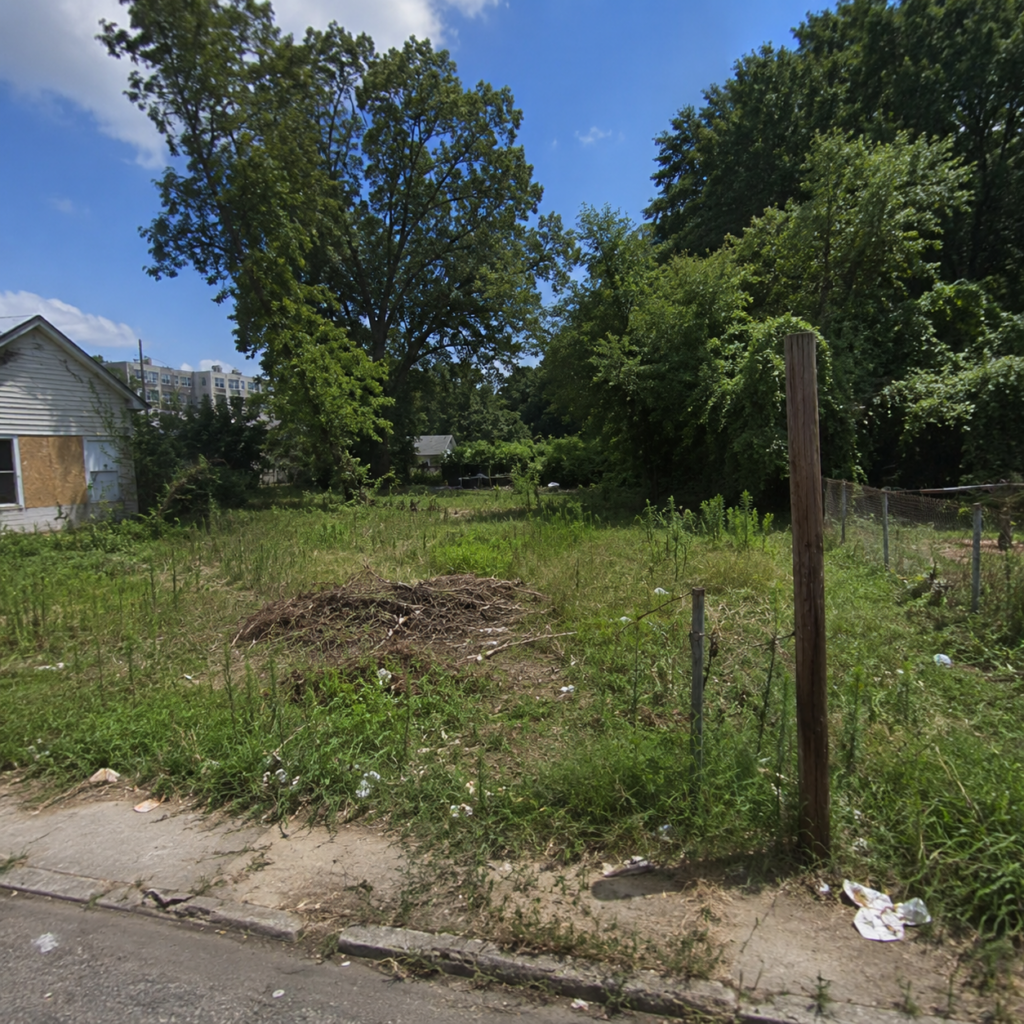
If you have typed “sell my land fast” into a search bar, you have probably already learned the hard part: vacant land does not move the way a house does. A house has photographs, a school district, and a mortgage product behind it. A wooded acre off a county road in south Fulton has none of those things. Listings sit. Agents lose interest. Meanwhile the tax bill arrives every year whether or not anyone has made you an offer.
That gap between what landowners expect and what the raw land market actually does is the reason this page exists. Below is the full picture: why land is slow to sell in metro Atlanta, what your parcel is realistically worth, what holding it costs you each year, how Georgia handles back taxes and liens at the closing table, and what a direct cash sale looks like start to finish.
If you would rather skip the reading and just get a number, you can request a no-obligation cash offer or call (404) 913-7086. There is no fee and no obligation either way.
| Quick answer: The fastest way to sell land in metro Atlanta is a direct cash sale to a land buyer rather than a traditional listing. A listing on raw land commonly takes six to twelve months and depends on a buyer securing land financing. A direct cash purchase removes the agent, the financing contingency, and the repair-and-cleanup expectation entirely. Atlanta Land Buyers closes most parcels in 7 to 14 days, buys as-is, charges no commissions or fees, and settles back taxes and recorded liens out of the sale proceeds at closing rather than asking you to pay them up front. |
Why Land Is Harder to Sell Than a House in Metro Atlanta
Owners are often surprised that a parcel in a growing metro is difficult to sell. Atlanta is one of the fastest-growing regions in the country. Shouldn’t the land move?
Sometimes. But the retail land market is thin in ways the housing market is not, and five structural problems show up over and over.
1. Financing barely exists for raw land
This is the biggest one. A buyer purchasing a house can pick from dozens of loan products with three to five percent down. A buyer purchasing a vacant lot generally cannot. Raw land loans come from a small number of local banks and credit unions, typically require twenty to fifty percent down, carry higher rates, and run on shorter terms. Land with no utilities, no recorded access, or no clear buildability is often uninsurable and unfinanceable outright.
The practical consequence: your buyer pool is limited to people paying cash, or people who can clear a much higher bar than a homebuyer. Even a well-priced parcel waits for that buyer to appear.
2. Agents are not built for land
Most residential agents in the metro have never sold a vacant lot and do not want to. Commission on a $28,000 parcel is a fraction of commission on a $385,000 house, and the work is often greater: pulling plats, chasing down easements, confirming septic feasibility, walking overgrown property lines. Land listings frequently get taken on as a favor, posted once, and then quietly ignored. Owners interpret months of silence as a market problem when it is actually an attention problem.
3. Pricing information is genuinely bad
Land pricing data is wildly dispersed. One major listing platform reports a median near $54,306 per acre across the Metro Atlanta region; another shows undeveloped parcels near Atlanta averaging roughly $203,338 per acre. Both figures are technically accurate and neither tells you what your parcel is worth. A quarter-acre infill lot inside the Beltline and forty wooded acres in Henry County are the same “land” statistically and nothing alike in reality.
This is also why the county assessor’s value is a poor guide. Georgia assesses property at forty percent of fair market value, and assessors are valuing thousands of parcels at scale rather than appraising yours. Owners routinely anchor to an assessment that has little to do with what a cash buyer would actually pay — in either direction.
4. The problems that make land hard to sell are invisible in photos
Landlocked parcels with no recorded access. Lots that fail a percolation test and cannot take a septic system. Floodplain and wetland encumbrances. Slivers left over from an old subdivision plat. Parcels where the legal description in the deed no longer matches anything on the ground. A retail buyer discovers these in due diligence and walks. That is how a lot goes under contract three times and never closes.
5. The clock is not neutral
A house you are trying to sell is usually occupied, insured, and maintained. A vacant lot accrues taxes, association dues, and code-enforcement exposure while producing nothing. For context, Atlanta homes spent a median of roughly 52 days on the market in early 2026. Raw land routinely takes six to twelve months, and problem parcels take longer or never sell at all. Every one of those months has a cost, which is the subject of the next section.
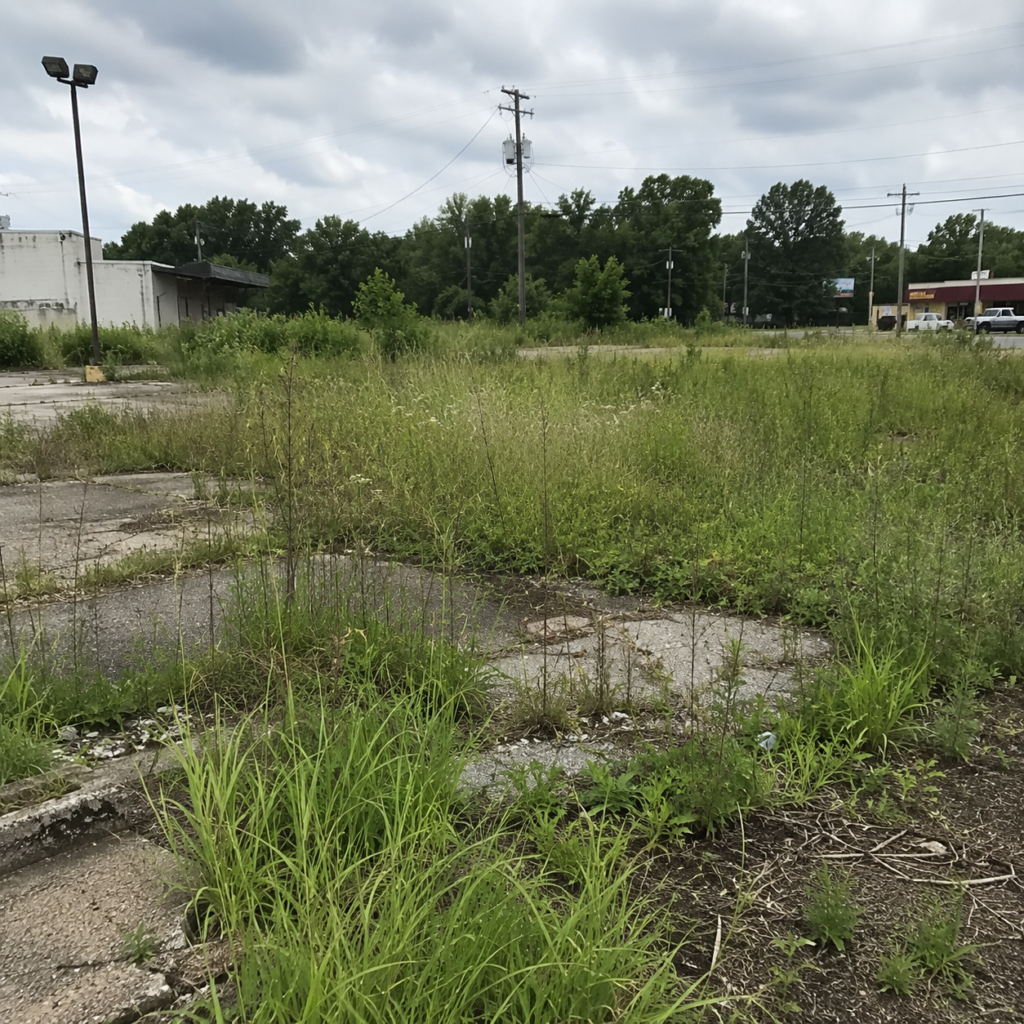
What It Actually Costs You to Keep Waiting
Landowners tend to think of an unwanted parcel as neutral — it just sits there. It does not. Metro Atlanta land carries real annual costs, and the ones tied to delinquency compound.
| Cost | What it is | Typical impact |
| Property taxes | County ad valorem tax on assessed value; city taxes too if the parcel sits inside a municipality | Recurs annually with no offsetting income |
| Interest on unpaid taxes | Georgia charges the bank prime rate plus 3%, accrued monthly (O.C.G.A. § 48-2-40) | Roughly 9.75% annually in 2026 |
| Late penalties | 5% penalty at 120 days past due, and again every 120 days (O.C.G.A. § 48-2-44) | Up to 20% of the original principal |
| HOA / POA dues | Assessments on platted subdivision lots, often on land nobody ever built on | Lien can attach automatically once past due |
| Stormwater & sanitation | Municipal fees assessed on parcels regardless of improvement | Recurs even on an empty lot |
| Maintenance & code enforcement | Mowing, dumping cleanup, citations for overgrowth | Unpredictable and rises with vacancy |
| Collection costs | Title research, advertising, levy, and sheriff’s costs once collection begins | Added to the balance owed |
Run the arithmetic on a real example. A parcel with a $2,400 annual tax bill that has gone three years unpaid is not a $7,200 problem. Add compounding interest, penalties that repeat every 120 days up to a twenty percent cap, and administrative costs once the county begins collection, and the balance can grow by a third or more before the parcel ever reaches auction. Owners who intend to “deal with it next year” are, in effect, financing the delay at a double-digit rate.
There is also a harder cost. Once a parcel goes to tax sale, it typically clears for little more than the back taxes owed — wiping out equity a normal sale would have preserved. Selling ahead of that date, even at a discount, almost always leaves the owner with more than the courthouse steps will. Our guides on what happens if you don’t pay property taxes and how many years you can be behind on property taxes in Georgia walk through that timeline in detail.
The Three Ways to Sell Land in Atlanta, Compared
There is no universally correct answer here. There is a correct answer for your parcel and your timeline. Here is the honest comparison.
| List with an agent | Sell it yourself (FSBO) | Direct cash buyer | |
| Typical timeline | 6–12 months, often longer on raw land | 3–18 months, highly variable | 7–14 days |
| Commission | 6–10% on land, sometimes more | None, but you do the work | None |
| Closing costs | Usually split; seller often pays more | Seller typically pays | We cover ours |
| Financing risk | High — land loans fall through often | High | None — cash |
| Condition expected | Cleared, surveyed, marketable | Same | As-is, no cleanup |
| Back taxes & liens | Often must be cleared to attract buyers | You resolve them | Settled from proceeds at closing |
| Price ceiling | Highest, if a buyer appears | High, with heavy effort | Below retail by design |
| Certainty of closing | Moderate | Low | High |
| Best when | Clean, buildable, well-located parcel and you can wait | You have time, patience, and a clean title | Speed, certainty, or a problem parcel matters more than top dollar |
We will say the obvious thing plainly, because buyers who won’t are not worth trusting: a cash offer is below full retail. That is the trade. You are exchanging some price for speed, certainty, no commissions, no cleanup, and no risk of a buyer’s financing collapsing three weeks in. On a clean, buildable, road-fronted lot in a hot submarket with no time pressure, listing it may well net you more. On an overgrown landlocked parcel with four years of back taxes and three heirs on the deed, a listing is largely theoretical.
If you are weighing this, the right question is not “which is higher on paper” but “what will I actually have in hand, after costs, on a date I can count on.”
What “Fast” Actually Means: A Realistic 7-to-14-Day Timeline
Here is what the process looks like when nothing goes wrong.
- Day 0 — You send basic details. Parcel number or address, county, roughly what you know about taxes and liens, and how to reach you. You do not need a survey, a title report, or a cleaned-up lot. Start here or call (404) 913-7086.
- Days 1–2 — We research and make an offer. We pull the parcel record, check the tax status with every taxing authority that touches it, look at access and zoning, and review recent comparable sales. Then you get a written number with the deductions shown line by line. No pressure, no obligation.
- Days 2–3 — Purchase agreement. If the number works, we sign a straightforward agreement. You are welcome to have an attorney review it; a legitimate buyer will never object to that.
- Days 3–10 — Title work. Georgia closings are conducted under the supervision of a licensed Georgia attorney. The attorney runs title, identifies recorded claims, and requests written payoffs from each lienholder, good through a stated date.
- Days 7–14 — Closing and funds. Confirmed payoffs appear as debits on the settlement statement, the attorney disburses to lienholders, and the balance goes to you by wire or check. Out-of-state sellers can typically close remotely — see how we work with out-of-state owners.
What genuinely slows a land closing down
Being straight about this matters more than promising two weeks unconditionally.
- Unresolved probate. If the owner of record died and the estate was never probated, the estate generally needs Letters Testamentary or Letters of Administration before anyone can convey. See selling inherited land in Georgia and our overview of probate real estate in Atlanta.
- Multiple heirs. Every heir with an undivided interest may need to sign. One missing signature stops a closing cold.
- A security deed paid off but never cancelled. Common on land held for decades. Clearing it requires the lender to execute a cancellation of record.
- A defective or ambiguous legal description. Old metes-and-bounds descriptions that no longer close on the ground may need a corrective deed or a survey.
- Disputed liens or pending litigation. A contested claim may require a consent order or a quiet title action. Our guide on selling property with a lien on it in Georgia covers this in depth.
- Excess funds already in court. If a prior tax sale produced a surplus and the county filed an interpleader action, that money runs on a court schedule, not yours.
None of these are dealbreakers. They are scheduling facts, and identifying them on day two rather than day twelve is most of what separates a smooth closing from a stalled one.
How a Cash Offer on Atlanta Land Is Actually Calculated
Owners are right to be suspicious of a number that arrives with no explanation. Here is what goes into ours.
- Comparable sales of genuinely similar parcels. Not regional per-acre averages. A recorded sale of a similar-sized lot with similar access, in the same submarket, within the last twelve months.
- Access. Recorded road frontage is the single biggest value driver on raw land. A landlocked parcel with only a claimed prescriptive easement is worth a fraction of the same acreage with deeded frontage.
- Utilities. Public water and sewer at the road, or a realistic septic and well path. Distance to a power drop.
- Zoning and buildability. What the current zoning permits, minimum lot size, setbacks, and whether a variance would realistically be granted.
- Topography and encumbrances. Slope, floodplain, wetlands, stream buffers, utility easements, and recorded covenants.
- Condition and cleanup. Dumping, derelict structures, an abandoned mobile home, or heavy tree cover all carry real removal costs.
- Everything recorded against it. Back taxes, Fi.Fa.s, judgment liens, HOA assessments, and mechanic’s liens are paid from proceeds, so they come off the top.
- Time to resell. We take on the holding cost and the marketing time you would otherwise carry. That risk is priced in — honestly, it is the main reason the number sits below retail.
Two things we do not do: we do not make an offer before checking the tax status with every authority that touches the parcel, and we do not change the number at the closing table because something “came up.” If a genuine title problem surfaces that changes the economics, we tell you what it is and why, and you can walk.
Situations Where Selling Land Fast Makes the Most Sense
We buy across metro Atlanta — city, suburban, and rural; wooded, cleared, and off-grid; with utilities or without. We regularly buy small, oddly shaped, and landlocked parcels that agents pass on. These are the situations that come up most.
Tax-delinquent land
Once the tax commissioner issues a Fi.Fa., the parcel can be levied, advertised for four consecutive weeks in the county legal organ, and sold on the courthouse steps on the first Tuesday of the month. If you are behind and the balance is out of reach, selling before the auction almost always leaves you with more than the auction will. Start with our tax-delinquent land page and the Fulton County tax sale process.
Inherited land nobody wants
A parcel passes to three siblings in different states, none of whom want it, and the tax bill keeps arriving at a deceased parent’s address. Interest compounds for years before anyone notices. See selling inherited land and what happens if you inherit land in Georgia.
Out-of-state owners
If you inherited a lot in Clayton County and live in Arizona, you cannot easily inspect it, mow it, or fight a code citation. Remote closings are routine — see our page for out-of-state owners.
Land that failed to sell with an agent
A listing that sat for eight months with two showings is not a pricing failure so much as a market-fit failure. The parcel needs a buyer who does not need financing.
Subdivision lots carrying HOA dues
Under the Georgia Property Owners’ Association Act, the lien for unpaid assessments can arise automatically once payment is past due, and the recorded declaration itself provides notice. Owners of vacant platted lots are frequently unaware a growing balance exists.
Off-grid, wooded, or hard-to-reach acreage
No power, no water, seasonal access, or a road that requires a truck. These parcels have real value; they just have a narrow retail audience. See our vacant land page.
Land with a mobile or manufactured home on it
A dated or abandoned trailer usually reads as a liability to a retail buyer. We handle these — see we buy trailer homes in Georgia.
Divorce, estate settlement, or a business change
When a parcel needs to convert to a known number by a known date, certainty is worth more than an optimistic list price.
Selling Land With Back Taxes or Liens in Georgia
This is the single most common worry we hear, and the answer is better than most owners expect: in most cases you can sell land with a lien on it in Georgia. What you generally cannot do is convey clear, insurable title while a valid lien remains outstanding. The usual solution is not to clear the lien before selling — it is to resolve it during closing, out of the sale proceeds.
That distinction saves people real money. Sellers routinely assume they must pay off years of back taxes or a judgment out of pocket first. Frequently they do not. A properly structured Georgia closing pays each lienholder directly from proceeds, with the release recorded afterward.
What a Fi.Fa. does
When a Georgia property tax bill goes unpaid, the county tax commissioner may issue a writ of fieri facias — a Fi.Fa. — and record it on the General Execution Docket. It is a recorded lien against both the property and the owner of record. It clouds title, can surface on credit reports, and is the first formal step toward a tax sale.
If the parcel has already sold at tax sale
You are on a different clock. Georgia gives the former owner, creditors, and anyone holding an interest 12 months from the sale date to redeem. Redemption is not simply repaying back taxes: under O.C.G.A. § 48-4-42 you must pay the purchaser’s full bid, any taxes and special assessments they have paid since, plus a 20 percent premium for the first year and 10 percent for each year after. After twelve months the purchaser can serve a barment notice under O.C.G.A. § 48-4-45 to foreclose the right permanently. Our guide to the 12-month redemption period covers the arithmetic.
If a tax sale already happened and brought more than the debt
The surplus is called excess funds, and it belongs to the former owner and other interested parties in order of priority — not the county and not the buyer. It does not arrive automatically; you have to claim it. See Fulton County excess funds and, if the county has already deposited the money with the court, what an interpleader action means.
Other liens that show up on Georgia land
- Judgment liens recorded on the General Execution Docket, which attach through the owner — including a co-owner, a former spouse, or a deceased prior owner.
- HOA and POA assessments, which can arise automatically under the governing declaration without a separately filed claim.
- Mechanic’s and materialman’s liens under O.C.G.A. § 44-14-361.1, some of which are stale and unenforceable yet still cloud title until cancelled of record.
- Estate-related claims — unprobated title, year’s support petitions, or debts against the estate.
For the full treatment, read can I sell property with a lien on it in Georgia and how to sell land with back taxes in Georgia. None of this is legal advice; a Georgia real estate attorney should review anything disputed.
Selling Land County by County Across Metro Atlanta
Georgia property tax administration is county-level, and the differences are not cosmetic. Deadlines, sale schedules, and exemption rules all vary, and a parcel inside a municipality may carry a second bill on a completely separate calendar.
Fulton County
The largest inventory of tax-delinquent parcels in the metro, and the county where unprobated estates and out-of-date mailing addresses cause the most trouble. See selling land in Fulton County, the Fulton County tax sale process, and Fulton County excess funds.
DeKalb County
DeKalb bills in two installments from an August mailing, and any balance still outstanding after December 31 is subject to a lien. Parcels inside the City of Decatur carry a second bill on an entirely different calendar — a structure that quietly produces liens on properties whose owners believed they were paid up. See selling land in DeKalb County, how long you have to pay delinquent DeKalb property taxes, and City of Decatur vs. DeKalb County property taxes.
Cobb County
Strong land demand along the northwest corridor, and a county where senior exemption rules differ sharply from neighbors. See selling land in Cobb County.
Gwinnett County
Large parcel counts, active development, and a lot of platted subdivision lots carrying HOA balances. See selling land in Gwinnett County.
Clayton County
A high concentration of small residential lots and inherited parcels, and one of the metro’s more common sources of out-of-state ownership. See selling land in Clayton County.
Henry County
Rural and semi-rural acreage on the south side, where access and septic feasibility drive value more than anything else. See selling land in Henry County.
Outside the core metro, our Georgia land buyers page covers where else we purchase.
What You Will Need to Sell
Less than most people assume. You do not need a survey, an appraisal, a cleared lot, or a title report. Helpful to have:
- The parcel identification number (PIN) or the property address
- The county the land sits in, and whether it is inside a city
- A copy of the deed, if you have one — we can pull it from the Clerk of Superior Court if not
- Any tax notices, Fi.Fa. notices, or lien letters you have received
- If the owner is deceased: a certified death certificate and Letters Testamentary or Letters of Administration
- Contact information for any co-owners or co-heirs with an interest in the parcel
Gathering this usually takes half an hour. The sale itself runs 7 to 14 days once an offer is accepted.
How to Vet a Land Buyer Before You Sign Anything
Once a delinquency shows up in public records, the mail and the phone calls multiply. Most direct buyers are legitimate. Some are not. Treat these as red flags:
- Any upfront fee. A legitimate land buyer never asks you for money. Not an application fee, not a “processing” fee, not an inspection deposit.
- Pressure to sign today, or an offer that expires in hours.
- Objection to attorney review. If a buyer resists your having a lawyer read the contract, that is the whole answer.
- Blanks in the documents. Never sign anything with unfilled fields.
- A number with no explanation. You should be able to see how deductions for taxes and liens were calculated.
- Advice to stop communicating with the county or your servicer.
- A request to sign over the deed with a verbal promise you can buy it back later.
On excess funds specifically: Georgia caps third-party recovery fees at ten percent under O.C.G.A. § 44-12-224(a), and many county tax commissioners will only accept a claim from the claimant or a Georgia-licensed attorney. You can very often file yourself and keep considerably more.
Taxes When You Sell Land in Georgia
General information only — talk to a CPA about your situation. Three things come up constantly.
Capital gains and stepped-up basis. Inherited property generally receives a stepped-up basis to its fair market value at the date of death. If you sell reasonably close to that value, taxable gain is often small or nonexistent. This surprises heirs who assume a sale triggers a large bill.
Nonresident withholding. Georgia requires withholding on sales of Georgia real property by nonresident sellers, subject to exemptions and to documentation of actual gain. If you live out of state, ask the closing attorney how it applies to your transaction before closing rather than after.
Reporting. Real estate sales are generally reported to the IRS on Form 1099-S by the closing agent. Keep the settlement statement.
Frequently Asked Questions About Selling Land Fast in Atlanta
How fast can I actually sell my land in Atlanta?
Most of our closings run 7 to 14 days from accepted offer. The limiting factor is almost never us — it is title. A clean parcel with one living owner and a clear deed can close in a week. An unprobated estate with four heirs takes longer, and no buyer can honestly promise otherwise.
Do I need a survey or an appraisal to sell my land?
No. We buy as-is and do our own research from the parcel record. If a survey is genuinely needed to resolve an ambiguous legal description, we will tell you and discuss how to handle it.
Can I sell my land if I owe back property taxes?
Yes, in most cases. The balance is confirmed in writing by the closing attorney and paid from the sale proceeds at closing rather than out of your pocket beforehand. See selling tax-delinquent land.
What if my land has already been advertised for a tax sale?
Time matters more than price at that point. Contact us immediately — once the auction happens, your options narrow to a 12-month redemption at the purchaser’s bid plus a 20 percent premium, which rescues far fewer properties than owners expect.
What if the land is landlocked or has no road access?
We still buy them. Access is the biggest single value driver on raw land, so it affects the price — but “no agent will list it” is not the same as “nobody will buy it.”
I inherited land but the estate was never probated. Can I still sell?
Usually, but the estate generally needs legal authority first — Letters Testamentary or Letters of Administration from the probate court. A title company will require that document before funding. See selling inherited land and how to sell inherited land in Atlanta.
There are several heirs and we do not all agree. What now?
Every heir with an undivided interest generally has to sign the deed. If some heirs are willing and others are not, that is a legal question worth putting in front of a Georgia attorney early. It is solvable more often than families assume.
I live out of state. Do I have to travel to Georgia to close?
Generally no. Documents can typically be signed remotely with a notary and returned, and funds are wired. See how we work with out-of-state owners.
Are there any fees or commissions?
No. There is no commission, no listing fee, and no obligation to accept an offer. Your net is the offer amount minus any confirmed payoffs for taxes and recorded liens, shown on the settlement statement before you sign.
Will you buy a small or oddly shaped lot?
Yes. Slivers, remnant parcels from old subdivision plats, half-acre infill lots, and irregular tracts are all things we look at. These are exactly the parcels the retail market ignores.
How is your offer different from the county assessor’s value?
Georgia assesses at forty percent of fair market value, and assessors value parcels at scale rather than appraising yours individually. Assessed values can be well above or well below what a cash buyer would pay. Neither number is “the” value; a recent comparable sale is closer to the truth.
What if there is a mobile home, debris, or an old structure on the property?
Leave it. We buy as-is and price the removal in. You do not need to clean, clear, mow, or haul anything.
Will you buy land with an HOA balance?
Yes. Association assessments are confirmed in writing during closing and settled from proceeds like any other lien.
What if a lien is larger than the land is worth?
That happens on neglected rural parcels more often than people think. Options include negotiated reductions from junior lienholders, priority analysis, or partial releases. It needs legal review rather than guesswork — see selling property with a lien in Georgia.
Do I have to accept your offer?
No. There is no obligation whatsoever. Plenty of people get a number from us, decide to list instead, and that is a fine outcome. We would rather give you an honest figure than talk you into something.
Can I sell just part of my acreage?
Sometimes. Splitting a parcel requires a survey and county approval, and zoning minimums may prevent it. Tell us what you have in mind and we will tell you whether it is realistic.
Do you buy houses too, or only land?
Both. We buy land, and we buy houses including ones that need significant work — see I want to sell my ugly house.
What if my property already sold at a tax sale and there is money left over?
That surplus belongs to you and other interested parties, not the county. Read Fulton County excess funds, and if the county has filed suit, what an interpleader action is. Be wary of anyone offering to recover it for a large cut; Georgia caps those fees at ten percent.
How do I get started?
Send the parcel number or address and any notices you have received. Request a no-obligation cash offer, contact us, or call (404) 913-7086.
The Bottom Line
Land that is not doing anything for you is not neutral. It costs you taxes, dues, and fees every year, and if the balance goes delinquent it compounds at a rate no reasonable investment returns. The owners who come out of this well are rarely the ones who got the highest list price. They are the ones who looked at the actual math and moved before a county calendar made the decision for them.
If your parcel is clean, buildable, well-located, and you have twelve months to spare, list it — that is the honest advice. If it is overgrown, landlocked, inherited, delinquent, out of state, or has already failed on the open market, a direct cash sale is very likely the better outcome, and it is worth at least seeing the number.
| Ready to sell your land fast in Atlanta? We are local, direct land buyers. We buy vacant, inherited, and tax-delinquent land throughout metro Atlanta as-is, with no commissions and no fees, and most closings run 7 to 14 days. We research the tax status with every authority that touches your parcel before making an offer, rather than discovering a second lien midway through closing. Call or text (404) 913-7086, request a no-obligation cash offer, or contact us with a question about your situation. We will give you a straight answer either way — including when the answer is that you should list it instead. |
Ready To Sell Your Land? Start Here…
We are direct land buyers. There are no commissions or fees and no obligation whatsoever. Start below by sharing where your property is and where we can send your offer…
"*" indicates required fields

And if you would rather talk it through, call us anytime at (404) 913-7086 to discuss your land and back taxes in person.