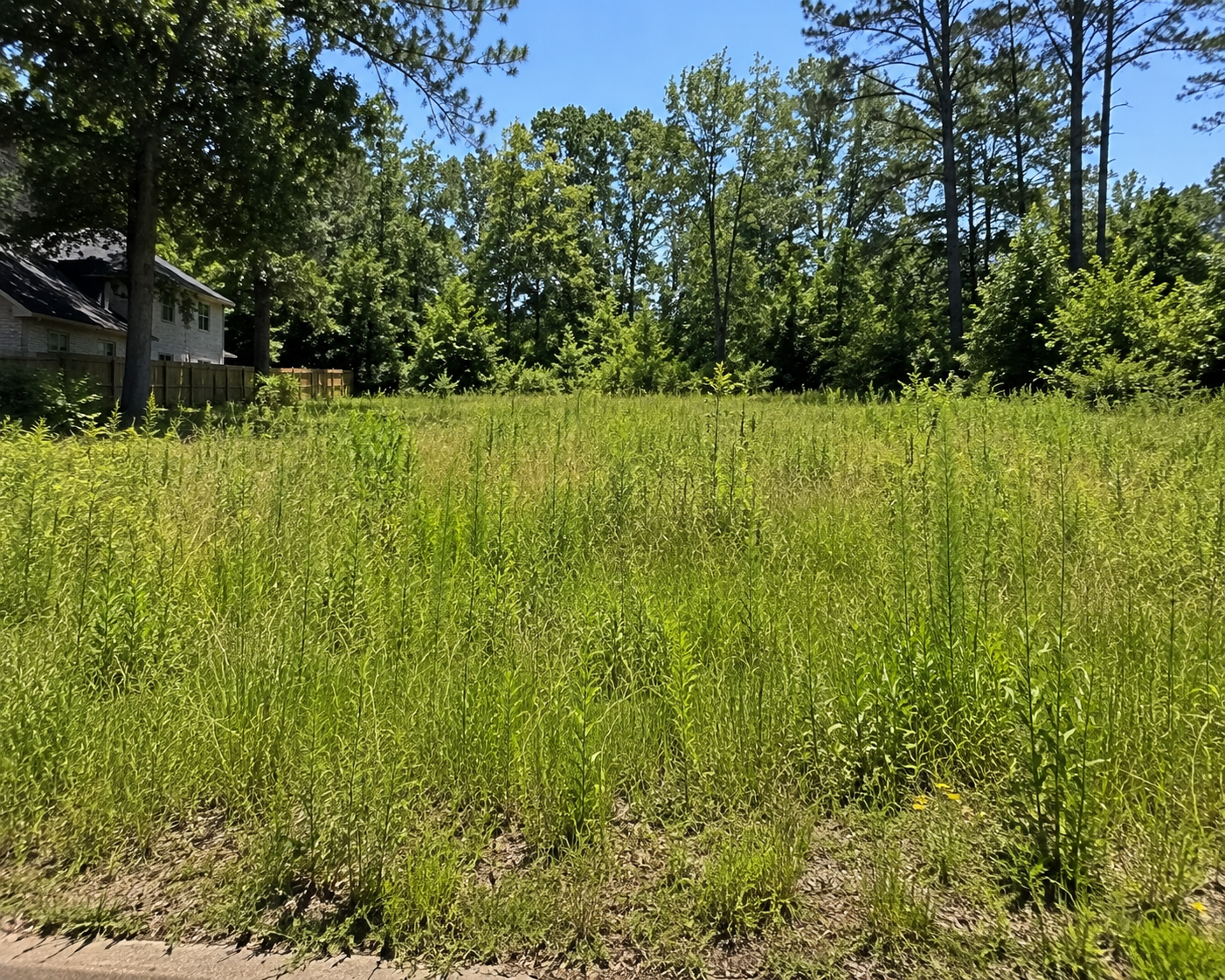
Short answer: the county treats land exactly like a house — same lien, same auction, same first Tuesday of the month. What is different is everything around it. Land has no mortgage servicer quietly paying the tax to protect its collateral, no homestead exemption, and nobody living on it to open the mail. That combination is why vacant and inherited parcels are wildly overrepresented on every metro Atlanta delinquent list, and why land owners are the ones most likely to find out too late.
If you are asking what will happen if you do not pay property taxes on your land, you have probably already read the generic answer: a lien, then penalties, then a tax sale. That is true, and it applies to land the same way it applies to a three-bedroom ranch in Decatur.
But it is not the useful answer, because it does not explain why land owners lose property at such disproportionate rates. This guide covers what is specifically different about land — vacant lots, raw acreage, inherited parcels, commercial sites — and what those differences mean for you.
If what you actually want is the timeline and the arithmetic — how many years you can be behind, what the interest rate is, when the penalties post, and what redemption costs — that is covered in full in our companion guide on how many years you can be behind on property taxes in Georgia. This article assumes you have that and focuses on the land side.
Why Land Falls Behind Far More Often Than Houses
This is not carelessness on the part of land owners. It is structural, and understanding why matters because every one of these causes has a fix.
There is no escrow account paying it for you
On a mortgaged house, the servicer collects taxes monthly and pays the county on your behalf. You never see the deadline because someone else is watching it. Most land is owned free and clear — bought with cash, inherited, or long since paid off — so there is no servicer, no escrow, and no automatic payment. The entire responsibility sits with you, and nothing reminds you.
This also removes a protection people do not know they have. When a mortgaged homeowner falls behind on taxes, the lender will typically advance the payment to protect its collateral and add the amount to the loan balance. It is expensive, but it stops a tax sale. Nobody performs that function for a vacant parcel. There is no backstop.
Nobody lives there to notice
A homeowner sees the bill arrive, sees the second notice, and eventually sees the certified letter. A vacant parcel generates the same mail, sent to whatever address the county has on file. If you moved, if the owner of record died, if the mail went to a relative’s house in 2014 — none of that stops the process. It just means you find out later, when your options are worse.
The bill feels small until it is not
Annual taxes on an unimproved lot can be a few hundred dollars. It is easy to defer a small bill for a year, and then another. But small balances are exactly the ones counties clear efficiently, because the enforcement cost is the same whether the debt is $400 or $40,000. A modest tax bill is not protection.
Ownership is often unresolved
An enormous share of delinquent land in metro Atlanta is inherited property where the estate was never probated. Nobody has clear authority to pay, sell, or decide, so the taxes accrue while the family works out what to do. See what happens if you inherit land in Georgia.
Five Things That Are Different When It’s Land
1. No homestead exemption applies
Homestead exemptions — including Georgia’s senior exemptions, which can be substantial — apply only to your primary residence. Vacant land, second parcels, rental land, and investment acreage get none of it. Georgia assesses property at 40 percent of fair market value, and on land that full assessment applies without the relief a homeowner receives. The parcel you never visit is taxed without a discount.
2. Vacant land is the preferred target at a tax sale
Investors bidding at Georgia tax sales generally prefer vacant parcels over occupied houses, and the reasons are practical. There is no occupant to deal with. There is no structure that might have a failing roof or an unpermitted addition. The opening bid is usually low because it reflects the tax debt rather than the value. And a vacant lot requires no maintenance while the redemption period runs.
The consequence for you is uncomfortable but worth knowing: your parcel is more likely to actually attract a bidder and sell than an equivalent house would be. Delinquent land does not sit unsold as often as owners assume.
3. Code enforcement runs on a separate track
This is the cost that catches vacant lot owners completely off guard. Cities across metro Atlanta cite overgrown, unsecured, or debris-filled lots. If you do not respond, the city can abate the nuisance itself — mow it, clear it, board it — and attach the cost to the property as a lien.
Those liens are separate from your tax debt, accrue on their own schedule, and do not go away because you eventually pay the taxes. On a neglected lot in an incorporated city, abatement liens can eventually exceed the original tax balance. See can I sell property with a lien on it in Georgia.
4. HOA and POA dues keep running on platted lots
If your parcel is a lot in a platted subdivision, the association’s assessments usually continue indefinitely whether or not anything was ever built. Unpaid dues become a lien, and a Georgia HOA can pursue foreclosure over assessments entirely independently of the county. See HOA foreclosure.
5. You carry liability on land you never visit
Trespassing, ATV use, illegal dumping, and injuries on unposted land are genuine exposures for absentee owners. Vacant land insurance is inexpensive, and most owners of neglected parcels do not carry it. This rarely causes the tax problem, but it frequently compounds it.
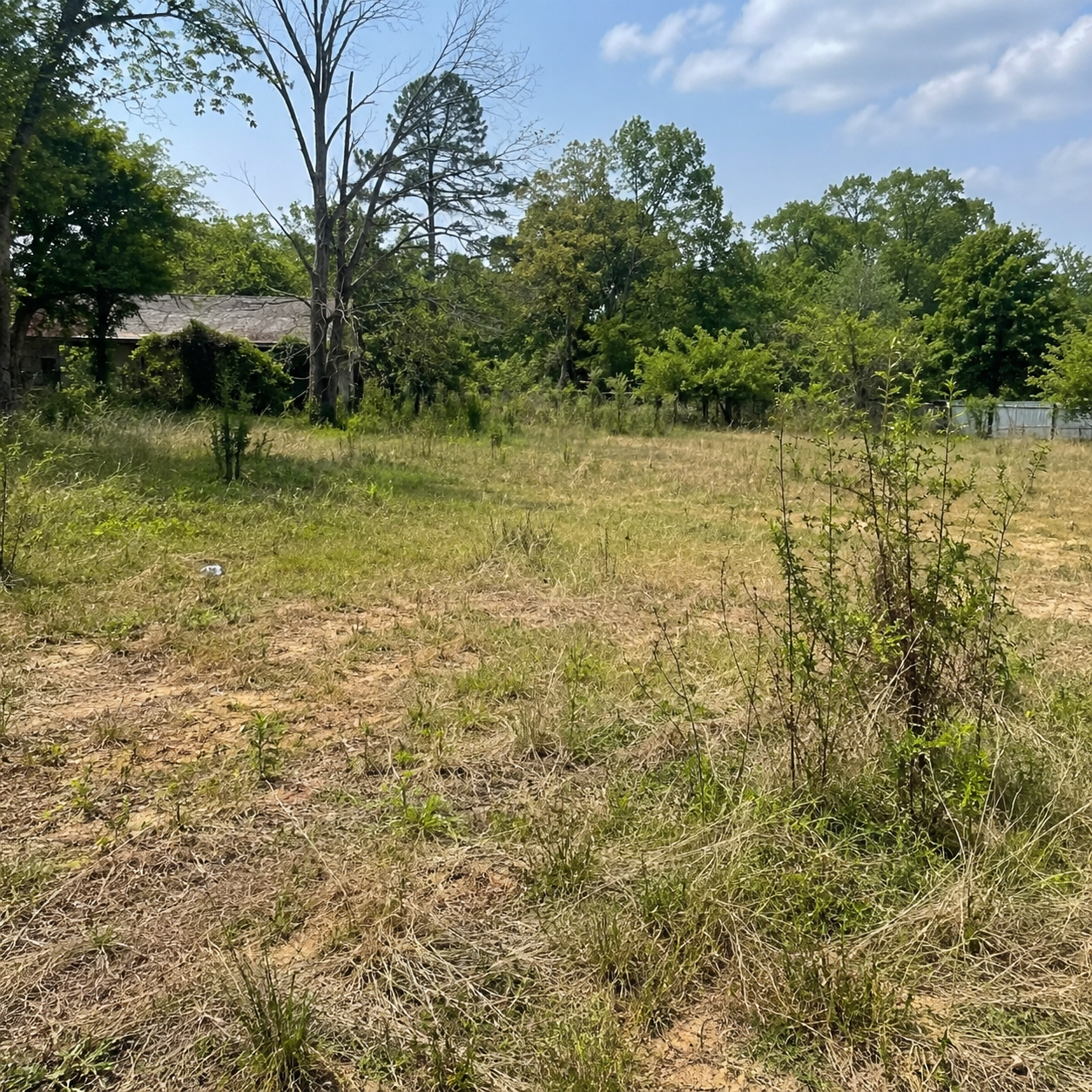
What Happens to Different Kinds of Land
The legal process is identical. The practical picture is not.
| Type of land | Why it goes delinquent | What is distinctive about the outcome |
| Vacant residential lot | Small annual bill, no escrow, often held for a build that never happened | Highly attractive to tax sale bidders. Code enforcement and HOA liens frequently stack on top. |
| Raw acreage or timberland | Absentee ownership, family land, no income from the parcel | A conservation use covenant can add a recapture penalty on top of the tax debt if it is breached. |
| Inherited land | Estate never probated; no heir has authority to pay or sell | The hardest to resolve quickly, because authority to sell must be established before any closing can fund. |
| Commercial or development parcel | Deal fell through, financing changed, entitlement stalled | Tax bills are substantially larger, so balances compound faster and draw county attention sooner. |
| Landlocked or unbuildable | Owner concluded the parcel is worthless and stopped paying | Still fully taxable. Often has real value to an adjoining owner even when it has none to you. |
| Mobile home lot | Land and the home are frequently taxed and titled separately | Two separate obligations. Owners routinely resolve one and remain delinquent on the other. |
Inherited land deserves extra attention
Property taxes do not pause during probate. That single fact costs Georgia families more land than any other misunderstanding. An estate can spend two years in Fulton County Probate Court while the parcel quietly accrues taxes, penalties, and eventually a recorded execution.
Where a parcel has passed down through several generations without wills, you may have heirs property — fractured title shared among many descendants, sometimes dozens. Every co-owner has an interest, no single heir can act alone, and the property becomes nearly impossible to sell, insure, or borrow against. The Georgia Heirs Property Law Center is a nonprofit law firm that does exactly this work, with offices including Atlanta and targeted outreach in Atlanta’s Westside neighborhoods. If your family land has a tangled deed, start there. Also see probate real estate in Atlanta and how to sell inherited land.
Acreage under a conservation use covenant
If your acreage is enrolled in Georgia’s Conservation Use Valuation Assessment program, you agreed to a ten-year covenant in exchange for being taxed on current use value rather than fair market value — often cutting the bill substantially. Breaching that covenant triggers a recapture penalty. County materials commonly describe it as roughly twice the tax savings received over the life of the covenant, plus interest, though the exact formula and the treatment of specific circumstances vary.
Two things matter here. A new owner generally must agree to continue the covenant or become responsible for the penalty, which affects who can buy your land and at what price. And the penalty is calculated against savings you have already banked, so it grows the longer the covenant has run. Confirm your covenant status with your county board of tax assessors before you market the parcel — see the state’s CUVA fact sheet and Cobb County’s CUVA rules summary.
How to Check Exactly Where Your Parcel Stands
Most land owners are operating on a guess. You can replace it with facts in about thirty minutes.
- Find the parcel ID. Search your county’s parcel viewer — qPublic for Fulton County is the starting point for Fulton parcels, and the Fulton County Board of Assessors confirms the valuation and the owner of record.
- Confirm the owner of record is who you think it is. If it still shows a deceased relative, that is your first problem and it takes longest to fix.
- Get the tax balance in writing from the county tax commissioner, good through a specific date, and ask whether an execution has been issued.
- Search recorded liens through the GSCCCA lien index. This is where you will find tax executions, judgments, HOA liens, and code enforcement liens you did not know about.
- Call the city, not just the county, if the parcel sits inside an incorporated city. City taxes, city code enforcement, and county taxes are three separate ledgers, and being current on one says nothing about the others.
- Update your mailing address with the board of assessors while you are at it. On land, this is the single highest-value five-minute task on this page.
One question worth asking directly: is this parcel currently scheduled for a tax sale, and if not, is it in the levy queue? Write down who answered and when. Counties do not warn you when a parcel enters the queue, and the four-week newspaper advertisement is often the first unmistakable signal — see our guide to the Fulton County tax sale process.
Your Options for Land You No Longer Want
Owners tend to see two choices, keep paying or lose it. There are more than that, and several are land-specific.
Bring it current and keep it
If the parcel has a real future — you plan to build, it is appreciating, it adjoins something you own — clearing the balance is the cheapest outcome available, and it gets cheaper the earlier you do it. Ask about partial payments while you assemble the money.
Sell it to the neighbor
Genuinely underrated for small, landlocked, or oddly shaped parcels. Land that is worthless on the open market can be worth real money to the person whose property it touches, because it solves an access problem, squares a boundary, or adds buffer. A quarter-acre strip nobody would build on can be the most valuable quarter acre on the block to exactly one buyer.
Donate it to a land trust or qualified charity
For acreage with conservation value, a properly structured donation can produce a charitable deduction rather than a continuing expense. Appraisal requirements are strict and the organization has to want the parcel, so this takes lead time — but it is a real exit for land that will never be developed.
List it with a land agent
If the parcel is clean, buildable, well located, and the taxes are current or nearly so, listing has the highest ceiling. Be realistic about timeline: land commissions typically run higher than residential precisely because marketing periods are longer. Our guide to selling vacant land in Atlanta compares the routes side by side.
Sell it as-is to a direct buyer
You do not need to pay the taxes before you can sell. In a Georgia closing the delinquent balance is paid from the sale proceeds and the lien released afterward — this works even after an execution has been recorded, the same way a mortgage payoff does. Most land owners do not know this, and it is the reason many of them wait far longer than they needed to.
The trade-off is price: a cash buyer absorbs the tax payoff, the title risk, and a long resale timeline, and the offer reflects that. What you get is speed and certainty. Our guide to cash buyers for tax-delinquent land in Atlanta explains how offers are calculated so you can judge whether one is fair, and selling tax-delinquent land covers the process.
One comparison worth running before you decide anything: a tax sale clears for little more than the debt owed, which wipes out equity a normal sale would have preserved. Selling ahead of the auction, even at a discount, almost always leaves you with more than the courthouse steps will.
Questions and Answers About Unpaid Property Taxes on Land
Do you have to pay property taxes on vacant land in Georgia?
Yes, every year, indefinitely. Owning land free and clear does not end the obligation, and there is no point at which an unimproved parcel stops being taxable. Limited exemptions exist for certain agricultural, conservation, and nonprofit uses, but they reduce the bill rather than eliminate it.
Can I lose my land for unpaid property taxes?
Yes. Vacant land is sold through the same process as any other Georgia property, and in practice it is a more attractive target for bidders because there is no occupant and no structure to manage. Delinquent land does not sit unsold as often as owners expect.
Does inherited land still owe property taxes during probate?
Yes. Taxes continue accruing regardless of whether the estate has been opened, whether an executor has been appointed, or whether the heirs have agreed on anything. This is one of the most common ways Georgia families lose land.
What happens to land taxes if the owner died and nobody probated the estate?
The bill keeps coming, addressed to a person who cannot pay it, and often to an address nobody checks. The county proceeds normally. Before the parcel can be sold or cleanly resolved, someone generally needs legal authority from probate court — which is why acting early matters so much here. The Georgia Heirs Property Law Center and Georgia Legal Aid both work on exactly this.
Is unbuildable or landlocked land still taxable?
Yes. Assessed value should reflect the limitations, and if it does not you can appeal — but no parcel becomes tax-exempt because it is difficult to use. Landlocked and unbuildable parcels often still have value to an adjoining owner, which is worth exploring before you walk away.
Can I just abandon land I don’t want?
Not really. Georgia has no mechanism for simply walking away from real property. The tax obligation stays attached to the parcel and to you as the owner of record until title transfers to somebody else, whether by sale, gift, donation, or tax sale. Abandoning it in practice means waiting for the county to take it, which is the outcome that costs you the most.
What happens if I don’t pay property taxes on commercial land?
The same process, on a larger balance. Commercial and development parcels carry higher tax bills, so arrears compound faster and reach a level that attracts county attention sooner. An outstanding execution also complicates future financing and entitlement work, which frequently matters more to a developer than the debt itself.
Do I owe taxes separately on the land and a mobile home sitting on it?
Usually yes. In Georgia, land and a manufactured home are typically taxed and titled separately unless the home has been permanently affixed and the title retired. Owners regularly clear one obligation and remain delinquent on the other without realizing it. We also buy trailer and mobile homes on land.
Can I sell land that has back taxes owed on it?
Yes, and you do not need to pay the taxes first. The balance is paid out of the sale proceeds at closing and the lien released afterward. This works even after a tax execution has been recorded. The one situation requiring careful planning is when total liens exceed the parcel’s value.
What if the taxes are more than the land is worth?
It happens, particularly on small lots with years of arrears plus code enforcement liens. Options narrow but do not disappear: a negotiated resolution, a sale to an adjoining owner who values it differently, or a donation. Talk to a Georgia attorney before concluding the parcel is unsalvageable, because the arithmetic is often less bad than it looks once you see the actual payoff figures.
Will code enforcement liens go away when I pay the taxes?
No. Code enforcement and nuisance abatement liens are separate obligations recorded by the city, on their own schedule. Paying the county tax balance does nothing to them. Search the GSCCCA lien index to see everything recorded against your parcel rather than assuming taxes are the whole picture.
How many years can I be behind on land taxes before something happens?
That question is answered in detail, with the statute and the metro Atlanta timeline, in our companion guide on how many years you can be behind on property taxes in Georgia. The short version for land owners specifically: the absence of an occupant and an escrow account means the process usually progresses further before you notice it.
Local Resources for Georgia Land Owners
- Georgia Heirs Property Law Center — nonprofit law firm handling title clearing and fractured title for family land, with Atlanta offices and Westside outreach
- Georgia Legal Aid and Atlanta Legal Aid Society — free civil legal help for income-qualifying residents, including heirs property and housing matters
- Fulton County Board of Assessors and qPublic parcel search — valuation, owner of record, parcel maps
- GSCCCA lien index — search every lien, execution, and judgment recorded against your parcel
- Georgia Department of Revenue, Property Tax Division — statewide rules and county contacts
- Conservation Use fact sheet and Cobb County CUVA rules — covenant terms and breach penalties
The Bottom Line
What happens if you do not pay property taxes on land in Georgia is procedurally the same as what happens with a house. What is different is that nearly every safeguard a homeowner has by default is missing. No servicer is paying the bill for you. No exemption is reducing it. Nobody is standing on the property to notice the certified letter. And when the parcel does reach an auction, it is the kind of property bidders most want.
That is not a reason to panic — it is a reason to look. Pull the parcel record, get the balance in writing, search the lien index, and confirm the mailing address the county has for you. Land owners lose property to inattention far more often than to insolvency, and the fix for inattention costs nothing but an afternoon.
Own land in metro Atlanta with taxes attached? Atlanta Landbuyers buys vacant land, inherited parcels, raw acreage, and commercial lots across Fulton County and Georgia as-is — including parcels with an execution already recorded, code enforcement liens, or unresolved heirs. We confirm the payoff with the county, factor it into the offer, and pay it at closing through a Georgia closing attorney. No fees, no commissions. Call or text (404) 913-7086 or request a no-obligation cash offer. If keeping the land is the better move, we will tell you that.
Related: how many years you can be behind on property taxes · selling inherited land · out-of-state owners · DeKalb County · about our team
Ready To Sell Your Land? Start Here…
We are direct land buyers. There are no commissions or fees and no obligation whatsoever. Start below by sharing where your property is and where we can send your offer…
"*" indicates required fields