
A recorded affidavit of heirship in Georgia will not, on its own, produce marketable title for a real-estate sale. Georgia title companies typically require a court order before issuing title insurance on inherited property, and the standard route is a Petition for an Order Declaring No Administration Necessary under O.C.G.A. §53-2-40, filed in Georgia Superior Court. When a specialist cash buyer handles the curative work, sellers can often close in 7–14 days.
Three steps to protect your ability to sell quickly:
- Confirm how title passed. If the deceased held the property in joint tenancy with right of survivorship or through a beneficiary deed, title may have transferred automatically without court action. Check the recorded deed first.
- Gather core documents. You will need the death certificate, the current deed, any existing will, contact information for all heirs, and recent tax records.
- Contact a probate attorney or a specialist cash buyer. Atlantalandbuyers handles curative filings, back-tax payoffs, and remote closings for out-of-state heirs, which can compress a process that would otherwise take months.
Table of Contents
- What legal routes actually clear title for inherited land in Georgia?
- Atlantalandbuyers handles the curative work so you can close fast
- Key Takeaways
What legal routes actually clear title for inherited land in Georgia?
Georgia separates heirship from marketable title. Knowing you are an heir does not automatically give you title a buyer can insure. The three practical paths below differ significantly in speed, cost, and court involvement.
1. Petition for Order Declaring No Administration Necessary (O.C.G.A. §53-2-40)
This is the fastest court route when all heirs agree. The petitioner files in Georgia Superior Court, attaches a signed agreement from every heir describing the agreed division and the legal description of the property, and demonstrates that no unknown heirs of equal or closer degree exist. The court then issues an order that can be recorded to clear title. Notice requirements include publication or personal service on any non-joining parties. Because unanimous consent is required, one uncooperative heir makes this path impractical.
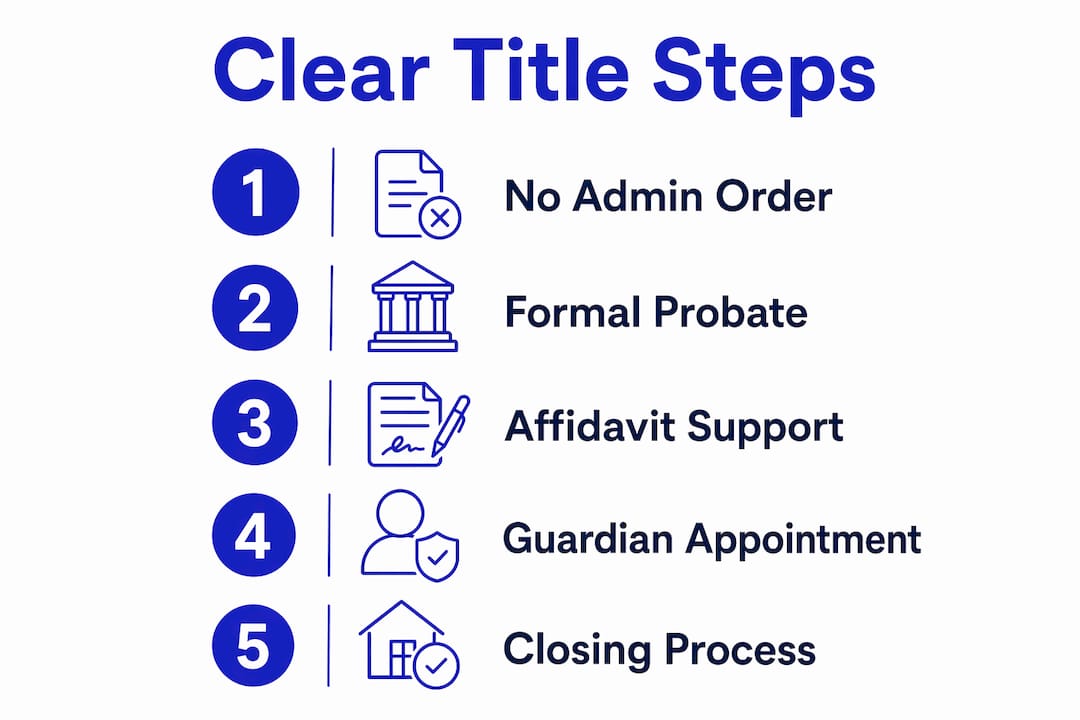
2. Formal probate or administration
When heirs disagree, debts exist, or a creditor has filed a claim, formal probate administration through the probate court is the appropriate path. A court-appointed administrator manages the estate, pays creditors, and distributes remaining assets. This route takes longer and costs more, but it produces a court order that title companies accept without exception. Consulting a probate attorney is strongly recommended whenever heirs are missing, a minor heir is involved, or the estate carries significant debt.
3. Where affidavits of descent fit in
An affidavit of descent (sometimes called an affidavit of heirship) documents family facts under oath and can support a petition, but it rarely substitutes for a superior-court decree when a title company needs to issue insurance. DIY affidavit forms downloaded online are frequently rejected at closing. Use an affidavit as a supporting document, not a standalone solution.

Pro Tip: If you have a missing heir or a minor heir, the court may appoint a guardian ad litem before the petition can proceed. Flag this situation to your attorney or cash buyer at the start, not after you have already filed.
Required documents and realistic timelines
| Document | Why it is needed |
|---|---|
| Death certificate | Establishes date of death and triggers heirship analysis |
| Current recorded deed | Confirms how title was held and identifies the legal description |
| Signed heir agreement | Required attachment for the O.C.G.A. §53-2-40 petition |
| Will (if any) | Determines whether intestate or testate rules apply |
| Tax records and receipts | Shows delinquencies; required by title company and buyer |
| Affidavits of descent | Supporting evidence for the petition; not a standalone instrument |
| Proof of service or publication | Satisfies notice requirements for non-joining heirs |
Fast path with attorney or cash buyer: 2–6 weeks for the petition; cash deals that include curative work often close in 7–14 days because the buyer advances costs and coordinates filings in parallel.
How liens and back taxes are handled at closing
In a cash sale, the buyer typically estimates the full payoff amount for any back taxes or liens before making an offer, then either advances those amounts at closing or deducts them from the purchase price. You do not need to resolve tax delinquencies before accepting an offer. Sellers who want to understand how back taxes affect net proceeds before signing anything can request an itemized breakdown from the buyer upfront.
Pros and cons at a glance
O.C.G.A. §53-2-40 petition:
- Fast (2–6 weeks), lower cost than full probate, produces a recordable court order
- Requires unanimous heir consent; one holdout blocks the entire process
Formal probate/administration:
- Handles debts, creditor claims, and disagreements; produces unambiguous title
- Slower (months to over a year), higher attorney fees
Affidavit of descent alone:
- Inexpensive and quick to prepare
- Rarely accepted by title companies for real-estate sales; carries title risk
Atlantalandbuyers handles the curative work so you can close fast
Inherited land with title complications does not have to mean months of legal limbo. Atlantalandbuyers purchases inherited land across Georgia and manages the curative process from start to finish, including petition filing coordination, attorney referrals, back-tax payoffs, and remote closings for out-of-state heirs.

No realtor commissions apply, and the buyer covers curative costs, either advancing them at closing or reflecting them in the offer. Cash offers typically arrive within hours of a property review, and most transactions close within 7–14 days once curative work is underway. If your situation involves back taxes, a lien, or heirs in multiple states, request a cash offer at atlantalandbuyers.com/georgia to get a clear picture of your net proceeds and a realistic closing timeline.
Key Takeaways
A Georgia affidavit of heirship alone will not clear title for a real-estate sale; a court order under O.C.G.A. §53-2-40 or formal probate is required before a title company will issue insurance.
| Point | Details |
|---|---|
| Affidavit alone is insufficient | Georgia title companies require a court order, not just a recorded affidavit, to issue title insurance on inherited property. |
| O.C.G.A. §53-2-40 is the fastest court path | The no-administration petition works when all heirs agree and sign the required division agreement. |
| Formal probate covers disputes and debts | When heirs disagree or creditors exist, full probate administration is the only reliable route. |
| Cash sales can close quickly once curative filings and tax payoffs are coordinated | A specialist buyer who coordinates curative filings and tax payoffs can compress the timeline significantly. |
| Atlantalandbuyers manages the full process | The company handles title curative work, back-tax payoffs, and remote closings for inherited Georgia land. |